Le Corbusier / Charles-Édouard Jeanneret
(1887-1965) architect, designer and painter
Luca Perlini · · 2 min read
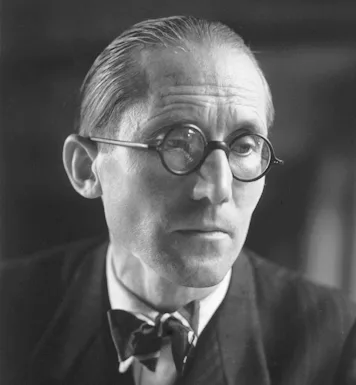
Le Corbusier is the pseudonym chosen by Charles-Édouard Jeanneret, architect, designer, painter, sculptor, writer and theorist, born in 1887 in La Chaux-de-Fonds, Switzerland.
He made his debut in 1905-1907 with Villa Fallet, built in his home town. In 1917 he moved to Paris, where he met the painter Amédée Ozenfant, with whom in 1920 he founded the magazine "L'Esprit Nouveau".
In 1925, at the Exposition Internationale des Arts Décoratifs in Paris, he presented the Pavillon de l'Esprit Nouveau, a project based on the meeting of architecture and painting, later regarded as one of the masterpieces of modern architecture.
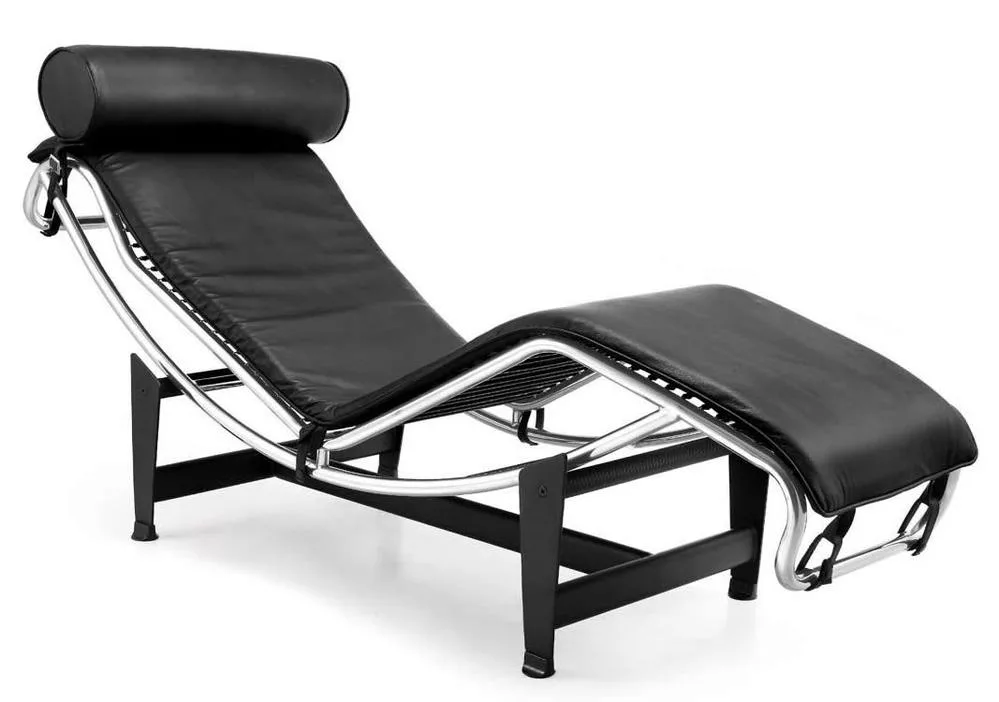
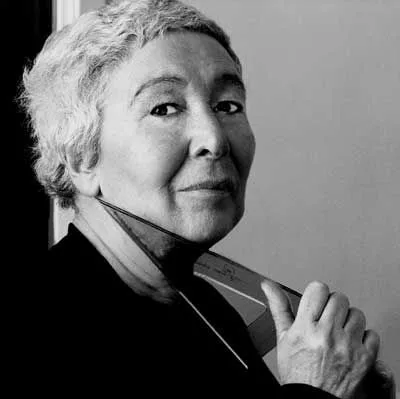
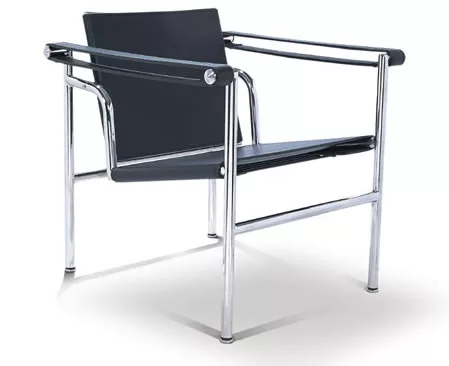
From 1928 he worked with Pierre Jeanneret and Charlotte Perriand on a series of tubular metal furniture immediately recognised as classics, including the famous adjustable LC4 chaise longue (1928).
Between 1928 and 1931 he built Villa Savoye in Poissy. In 1930 he drew up the first urban plan for Algiers and the design for the Swiss Pavilion at the Cité Universitaire in Paris.
Between 1929 and 1933 he built the Salvation Army's Cité de Refuge in Paris, with one of the first attempts at an air-conditioning system.
In the 1930s he developed his urban ideas: the Ville Radieuse, the plan for Nemours, the Cartesian skyscraper and the plan for Buenos Aires.
In 1950 he began the chapel of Notre-Dame-du-Haut at Ronchamp, and from 1951 he worked on Chandigarh, the new capital of Punjab, India. In 1965, the year of his death, he was working on the design for the new Venice Hospital.
Other important works by Le Corbusier:
- Still life with siphon (oil on canvas, 61 x 50 cm), 1921
- Glasses and bottles with wine (oil on canvas, 130 x 90 cm), 1928
- The fall of Barcelona (drawing, 71 x 103 cm)
- Vers une architecture (Towards an Architecture, essay), 1923