Arne Jacobsen
(1902-1971) architect and designer
Luca Perlini · · 2 min read
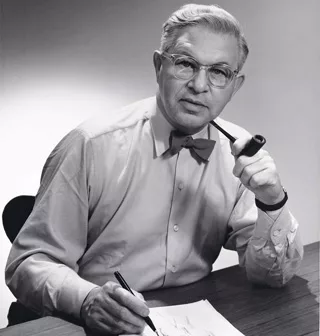
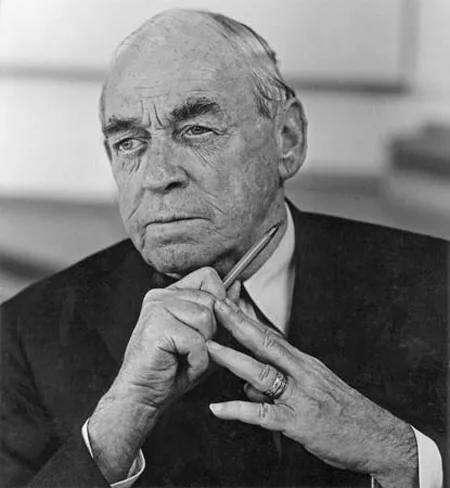
Born in Copenhagen in 1902, Arne Jacobsen studied architecture at the Royal Danish Academy of Fine Arts, graduating in 1927. He then worked in the architecture office of Paul Holsøe.
In 1930 he opened his own practice, where he worked until his death in 1971 as an architect and designer of interiors, furniture, textiles and ceramics.
From 1956 he was professor of architecture at the Royal Academy of Fine Arts in Copenhagen.
One of the leading exponents of international functionalism, he completed a great many projects in Denmark, Germany and Britain.
His most famous buildings are St Catherine's College in Oxford and the SAS Royal Hotel in Copenhagen (now Radisson Collection), built between 1956 and 1960.
For the hotel Jacobsen personally designed every detail, from the architecture to the furniture. It was Copenhagen's first skyscraper and, as a tribute to its architect, room 606 still keeps all its original furnishings.
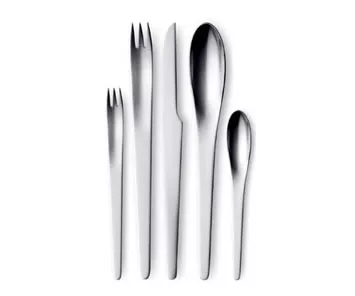
On the top floor, the Alberto K restaurant is named after the hotel's first manager and keeps Jacobsen's original furnishings, including the futuristic cutlery that appears in the film "2001: A Space Odyssey".
Also famous are the Egg and Swan chairs, as well as lamps, rugs and other furnishings designed for the hotel.
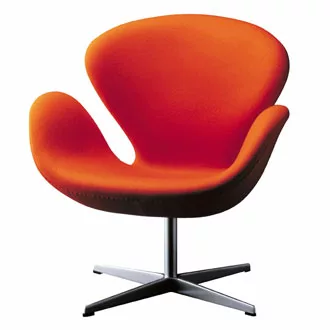
The Swan, designed in 1958, is innovative in both form and technique: a plastic shell covered with foam and upholstered in fabric or leather in various colours, on an aluminium base. It is made by Fritz Hansen.
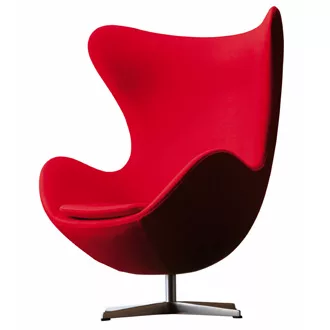
The Egg was designed in 1958 for the SAS Royal Hotel in Copenhagen.
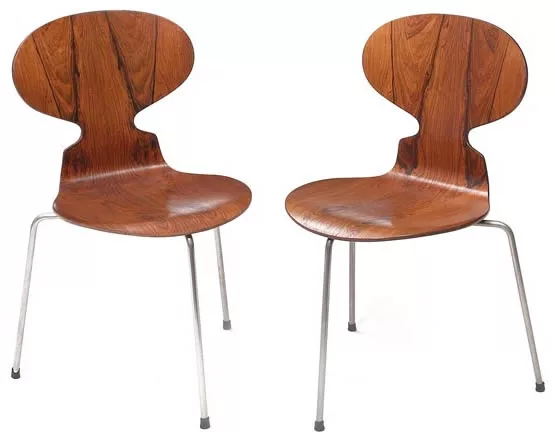
The Ant chair of 1952 is the first of a series of light chairs with which Jacobsen established himself as a designer internationally.
It is made of moulded plywood with metal legs, originally three, later four. Made by Fritz Hansen.
In 1957 Jacobsen received the Grand Prix at the 11th Milan Triennale.
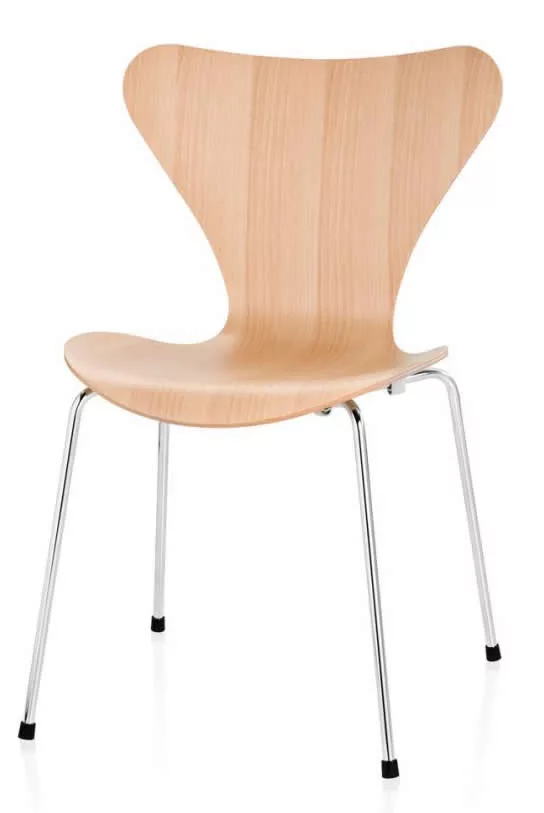
The Series 7 (1955), in moulded plywood with metal legs, is made by Fritz Hansen in several wood veneers and many colours.
Jacobsen's objects started as sketches, from which models in cardboard or other materials were then made: his work consisted in refining ideas until they reached the perfection you can sense when looking at his creations.