Gae Aulenti
(1927-2012) architect and designer
Luca Perlini · · 3 min read
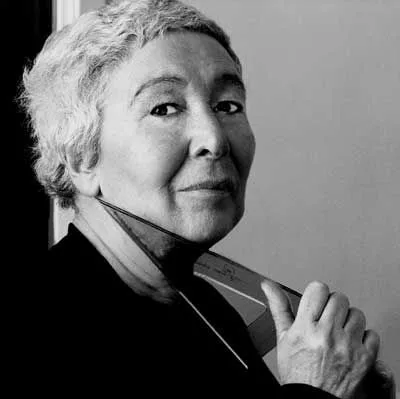
Gae Aulenti, a world-famous architect, also worked in industrial design, interiors and urban planning.
Born in 1927 in Palazzolo dello Stella, near Udine, she graduated in architecture from the Politecnico di Milano in 1953 and opened her own practice. Over her long career she designed buildings in many European countries and in the United States.
Among her most important architectural works:
- the conversion of the Gare d'Orsay, a nineteenth-century railway station, into the Musée d'Orsay (1980-1986, Paris);
- the interiors of the Musée National d'Art Moderne at the Centre Pompidou (1982-1985, Paris);
- the renovation of Palazzo Grassi (1985-1986, Venice);
- the Museu Nacional d'Art de Catalunya (Barcelona);
- the restoration and conversion of the Scuderie del Quirinale into an exhibition space (1999, Rome);
- the new Asian Art Museum of San Francisco (USA, opened in 2003).
She belonged to a group of young architects influenced by the thinking of Ernesto Nathan Rogers, and from 1955 to 1965 she was art director of Casabella magazine. Between the 1950s and 1960s she took part in the movement later called Neoliberty, whose originality would return in much of her work. She taught at the Istituto Universitario di Architettura di Venezia (1960-1962) and at the Politecnico di Milano (1964-1967).
From the mid-1960s she designed several showrooms for Olivetti, including the one in Paris; from 1968 she worked for Fiat, designing exhibitions, stands and showrooms such as those in Zurich, Brussels and Turin (1969-1970).
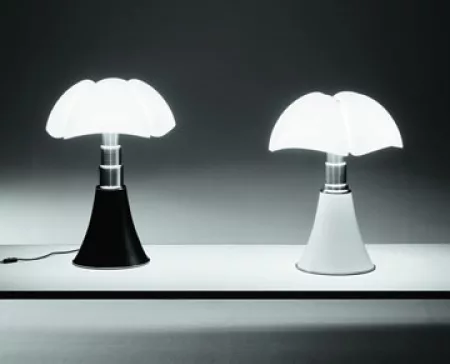
Pipistrello (1965) - table lamp - Martinelli Luce
In the 1960s she began working as a designer for Zanotta and created the famous Pipistrello lamp for Martinelli Luce. Her designs for Zanotta include the April stool and chair, the April folding chair (1964), the Locus Solus series and Solus chair (1965), the Festo table (1970), the Gaetano work table and Bettone bed (1971), the Bettino bed (1972), the Tripolina chair (1973), the Cardine work table (1983), the San Marco dining table and Appia console (1984), the Briscolo games table (1985) and the Ufficio series (1986).
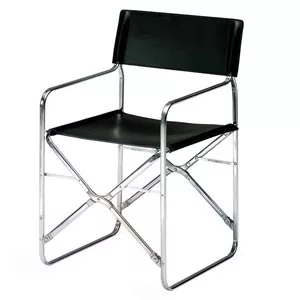
April (1964) - folding chair - Zanotta
In 1974 she designed her own office and flat in Milan, and in 1975 her country house near Assisi.
In 1985 she began working with iGuzzini and, for Palazzo Grassi in Venice, created Cestello, a lighting system designed for exhibitions that she would go on to use in many of her museum installations.
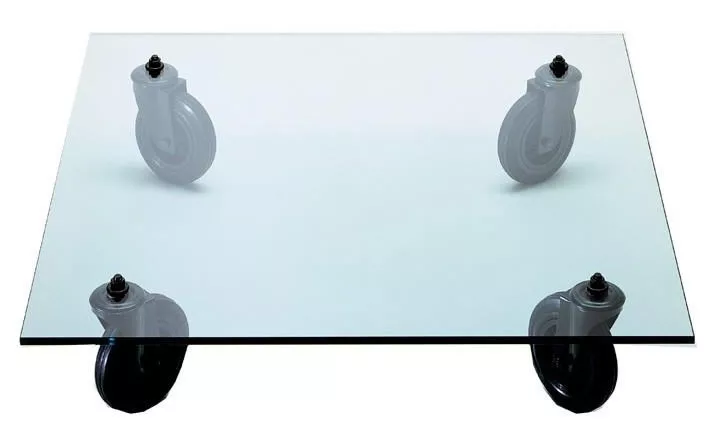
Table with wheels (1980) - coffee table - FontanaArte
In 1986 the conversion of the Gare d'Orsay into the Musée d'Orsay was completed, the project that brought her international fame.
In 1992 she designed the Italian Pavilion for Expo Seville, with Piero Castiglioni and iGuzzini lighting technology. Between 1997 and 1999 she directed the restoration of the Scuderie del Quirinale in Rome, and in 2000 she turned some rooms of Villa Menafoglio Litta Panza, in Biumo, Varese, into exhibition spaces.
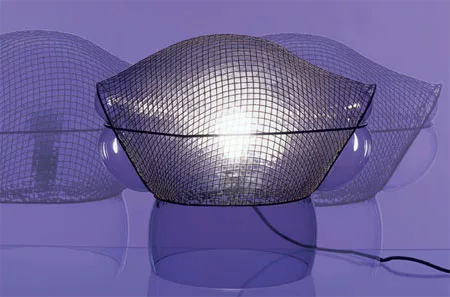
Patroclo (1975) - table lamp - Artemide
In 2001 she developed a smaller version of the Cestello system for iGuzzini, intended for small spaces.
Her work, successfully shown in many exhibitions, won numerous awards. Like other great architects of the twentieth century, Gae Aulenti ranged from houses to museums, from architecture to industrial and interior design. She died in Milan in 2012.